
Motion Waves. Every parameter. A world of movement.
At the heart of every Xionia instrument are Motion Waves, our way of giving parameters their own movement, rhythm and expression. Let movements influence one another, evolve independently or synchronise into something greater.
Every star has Motion Waves of its own, and StarShaper keeps every one. Give each parameter its own time, let one wave reshape or pull on another, turn movement into rhythm and let every wave answer the way you play.
One instrument in motion
Every supported parameter can have a wave of its own.
The waves shown move its oscillator pitch, pulse width, filter cutoff, resonance, drive, delay feedback and reverb size.
Each orbit is one wave’s cycle. At the centre, the waveform they shape.
The autopilot plays through all six, or pick one to stay with it. Pull the waves into step, hold to press harder, or pick Your own shape and draw on a lane.
Let one movement move another.
A wave can drive notes, triggers and rhythm, as well as sound.
Filter movement to Rhythmic density to Arpeggio notes to A new instrument
One Motion Wave moves a filter. Its movement changes the density of a rhythm, the rhythm changes which notes an FM arpeggio plays, and the arpeggio brings in a new instrument.
Extraordinary sound doesn’t have to stand still.
Explore StarShaper
Back to StarShaper-
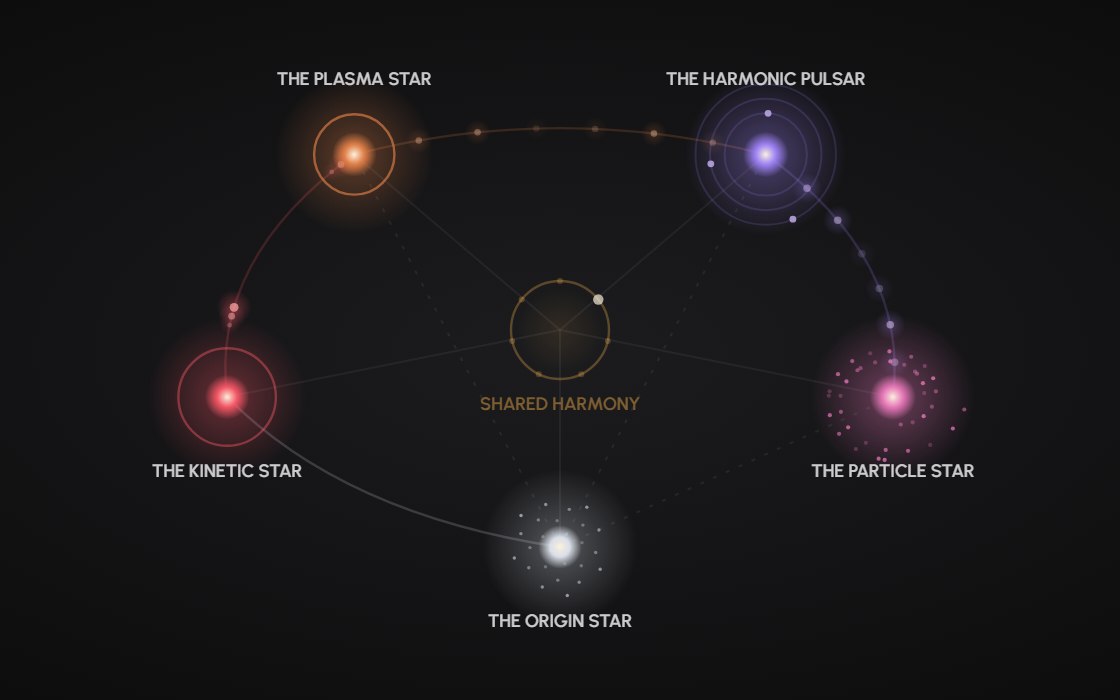
How do instruments shape one another?
Interconnected synthesis
Parameters, audio, effects and Motion Waves interact across all seven engines and every instrument you build.
-
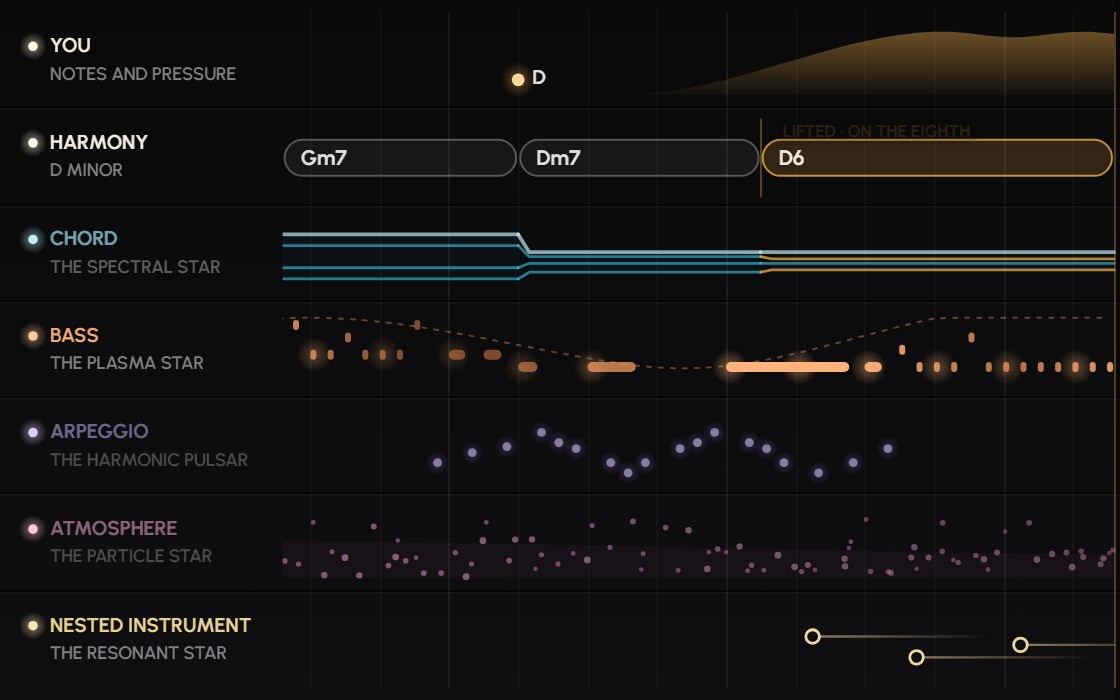
What does it play, and when?
Intelligent musical creation
Harmony, rhythm, arpeggiation, arrangement and performance become connected parts of the instrument, shared across everything you bring together.
-
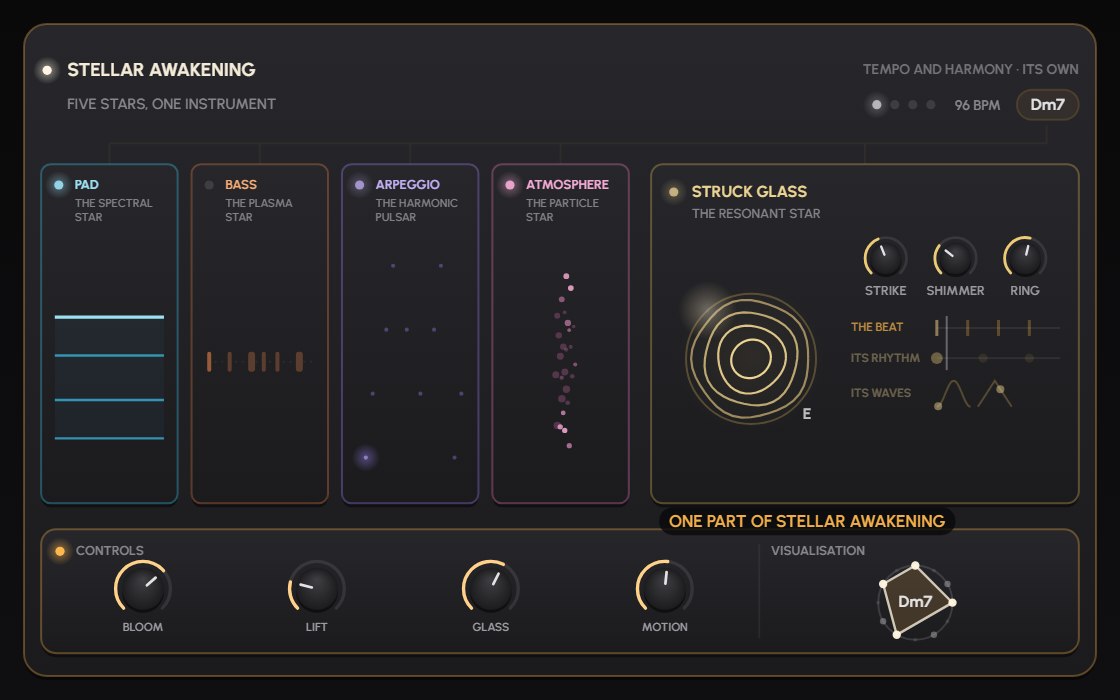
What can it become?
Instruments within instruments
Everything you build, its musical behaviour and connections included, can become an editable part of something larger.